
Microbubbles to optimize
oxygen transfer and
operational efficiency.
Microbubbles to optimize oxygen transfer and operational efficiency.
In water treatment systems,
aeration is key to the effective performance of
biological processes.
Diffusion via microbubbles allows for
improved oxygen transfer into the water,
promote more efficient operation, and reduce
the costs associated with aeration.
In water treatment systems,
aeration is key to the effective performance of
biological processes.
Diffusion via microbubbles allows for
improved oxygen transfer into the water,
promote more efficient operation, and reduce
the costs associated with aeration.
Benefits
- Up to 30% lower energy consumption for aeration
- Passive broadcasting with no energy consumption at the transmission point
- High oxygen transfer efficiency under optimal conditions
- Integration with IoT
- Return on investment within a competitive timeframe
Applied microbubble technology
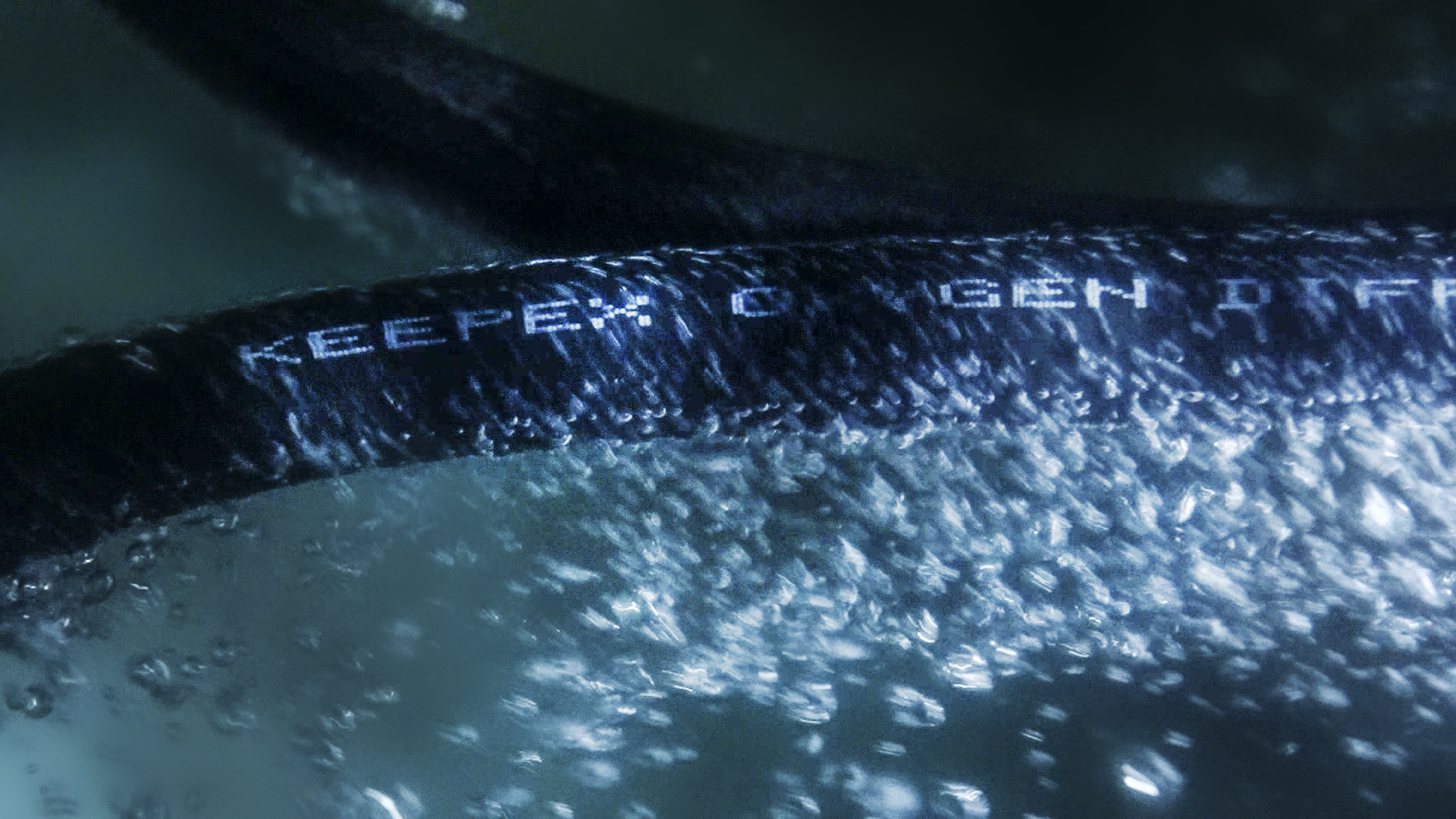
Keepex microperforated tubes feature more than 6,000 microperforations per meter and a hydrophilic polymer coating, generating microbubbles ranging from 90 to 250 microns. This configuration enables uniform diffusion and high gas transfer efficiency in aqueous media.
Applications
The system can be used in:
- Biological reactors and their configurations for water treatment (activated sludge, MBR, MBBR, SBR, among others)
- Lakes and aerated ponds
- Eutrophic lakes
- Treatment of organic wastewater
- Enhancing aeration in existing systems
What it brings to the process
It optimizes the system's aeration, ensuring a uniform and controlled distribution of oxygen.
It increases oxygen transfer efficiency, thereby improving process performance.
It promotes biological activity, accelerating the breakdown of organic matter.
It improves the removal of suspended solids, increasing the clarity of the treated effluent.
It allows for greater operational control by adjusting flow rates and aeration times based on demand.
Optimizes the energy consumption of the aeration system.
Reduces the operating costs (OPEX) associated with treatment.
It helps reduce the carbon footprint through more efficient operations.

System Features
Uniform dispersion via microbubbles
Quick installation
Simple maintenance
Maintenance without interrupting operations
Adjustable diffusers as required
A measurable and scalable system using a limited pilot

Monitoring and control
Keepex offers an IoT monitoring platform that provides real-time visibility into variables such as energy consumption, oxygen levels, and equipment operation. It also allows users to adjust operations based on process conditions, thereby optimizing performance and energy usage.
Implementation and launch
The system development process includes data collection, sizing, installation, commissioning, and operational monitoring, with a focus on measurable results and scalable solutions.
I WANT MORE INFORMATION
Enter your email and we will send you more information about this product.